
Moshe Slapped Pharaoh and Left

In Zevachim 102a, we read:
וְכׇל חֲרוֹן אַף שֶׁבַּתּוֹרָה נֶאֱמַר בּוֹ רוֹשֶׁם?! וְהָכְתִיב: ״וַיֵּצֵא מֹשֶׁה מֵעִם פַּרְעֹה בׇּחֳרִי אָף״, וְלָא אֲמַר לֵיהּ וְלָא מִידֵּי! אֲמַר רֵישׁ לָקִישׁ: סְטָרוֹ וְיָצָא.
The Gemara challenges the statement of Rabbi Yehoshua ben Korḥa: And is it true that for every burning anger that is stated in the Torah, its effect is also stated? But isn’t it written with regard to Moses: “And he went out from Pharaoh in hot anger” (Exodus 11:8)? And Moses did not say anything to Pharaoh. Reish Lakish said: Moses slapped him and left.
If we join together these two statements, what was the roshem / lasting mark involved in this charon af of Moshe? So, Reish Lakish said that Moshe slapped him. That would have left a mark! (That’s a joke, perhaps. Or maybe it is not, and that is how it is to be understood?)
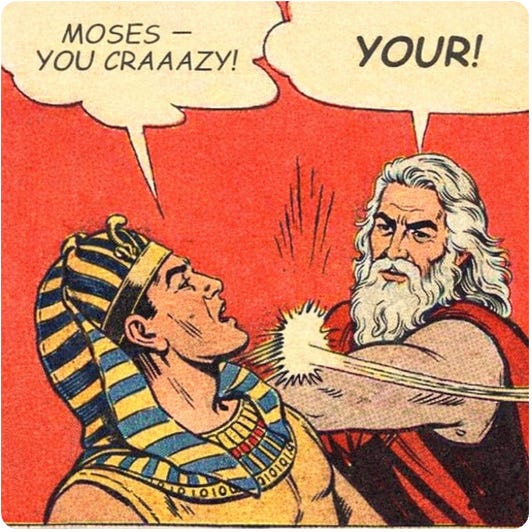
Rashi comments on the unusual word סְטָרוֹ, explaining it as slapped, or even more clearly, slapped him on the cheek. (ArtScroll helpfully include the cheek as part of their gloss translation.)
סטרו - הכהו על לחיו:
Jastrow does not have specifically on the cheek. So Rashi might just be giving an example or expansion to help us hone in on the idea of a slap. Or maybe he has some textual or cultural reference that specifically centers a slap to be on a cheek.
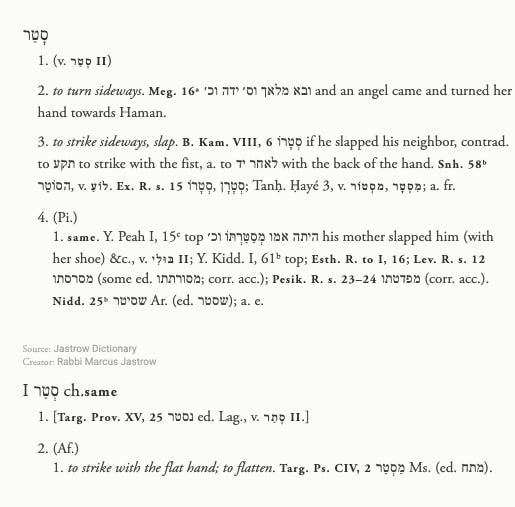
Regardless, I endorse this explanation of Rashi, for reasons that might be unrecognized in the sugya by many readers. Yes, once again, it is the hidden derasha.
Recall that the pasuk read:
וַיֵּצֵא מֹשֶׁה מֵעִם פַּרְעֹה בׇּחֳרִי אָף
And he went out from Pharaoh in hot anger
I don’t think that Reish Lakish necessarily came to answer the question posed later by the Talmudic Narrator. Rather, it is a derasha on the word אָף. Yes, it can mean nose. But it can also mean face, when it is apayim. And, as Jastrow notes, this is a dual form from אפפ which means “cheek”. See the third root entry:
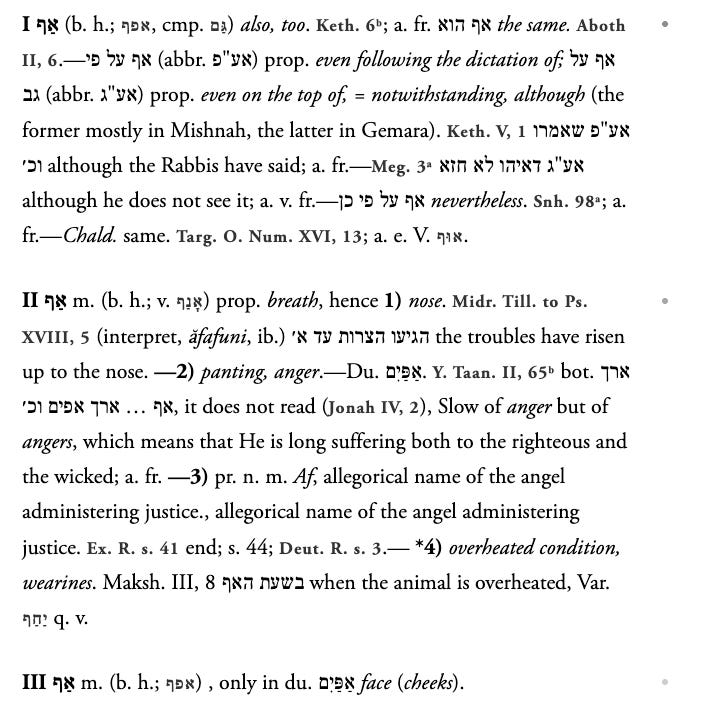
Thus, Reish Lakish is saying that Moshe slapped Pharaoh’s cheek, so there was charon upon Pharaoh’s app.