
Rav Ashi Revised

There were two other points I noticed about Zevachim 31, aside from the Eldad HaDani thing. Here is one of them. At the end of amud aleph, we have Rav Ashi ask a question:
בָּעֵי רַב אָשֵׁי: חִישֵּׁב לֶאֱכוֹל כְּזַיִת בִּשְׁנֵי בְּנֵי אָדָם, מַהוּ? בָּתַר מַחְשָׁבָה אָזְלִינַן – דְּאִיכָּא שִׁיעוּרָא, אוֹ בָתַר אוֹכְלִין אָזְלִינַן – וְלֵיכָּא שִׁיעוּרָא?
§ Rav Ashi raises a dilemma: If one had intent that two people would collectively eat an olive-bulk, what is the halakha? Do we follow the intent, in which case there is the requisite measure of an olive-bulk? Or do we follow those who eat, and neither eats the requisite measure?
אָמַר אַבָּיֵי, תָּא שְׁמַע: לֶאֱכוֹל כַּחֲצִי זַיִת וּלְהַקְטִיר כַּחֲצִי זַיִת – כָּשֵׁר, שֶׁאֵין אֲכִילָה וְהַקְטָרָה מִצְטָרְפִין.
Abaye said: Come and hear a proof from the mishna: If his intent was to eat half an olive-bulk and to burn half an olive-bulk beyond the designated time or outside the designated area, the offering is fit because eating and burning do not join together.
Even though the printed text has “Rav Ashi”, the Shita Mekubetzet emends to “Rava” and the Masoret HaShas emends to “Rav Asi”.
Indeed, only the printings have Rav Ashi,
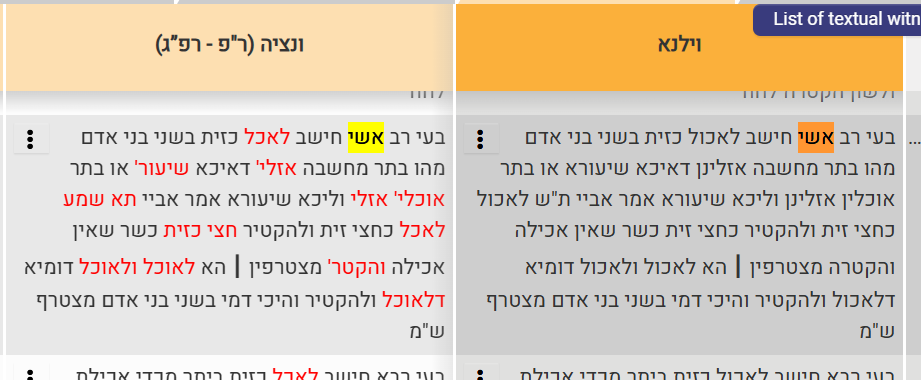
while all manuscripts have either Rava or Rabba.

ArtScroll, in a footnote, suggests that Shita Mekubetzet may be motivated by the fact that the next (quite similar) segment has Rava ask the question and Abaye answer. That, further, Rav Ashi lived after the time of Rava, so the ordering of these two segments seems off, to have the Rav Ashi section precede the Rava section.
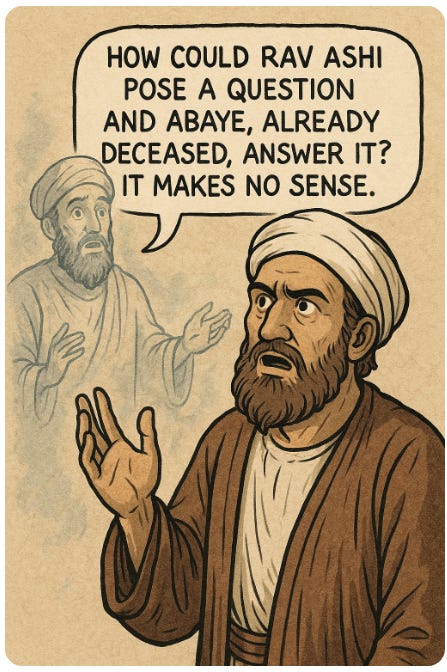
I think that aside from the manuscript evidence that the Shita Mekubetzet may have had, there is a much stronger reason. As ArtScroll noted, Rav Ashi lived after the time of Rava. Indeed, we’re told that Rav Ashi was born when Rava died. But there’s another point — Rava led Pumbedita academy after Abaye’s death. This means that Rav Ashi was born after Abaye died. If so, how could Rav Ashi pose a question and Abaye answer it? It makes no sense.
Presumably, רבא would be mussed up in some way and reread by a copying scribe as רב”א which could be expanded to Rav Ashi.
Rabba makes some sense as posing a question which his student Abaye attempts to answer. Rav Asi by the Masoret HaShas is not supported by any of the (limited) manuscript evidence, but was probably driven by sevara - logic. Namely, Asi is similar to Ashi and there is someone (third generation Rabbi Asi) who predates Abaye, to pose the question. And, earlier in the gemara, Rabbi Ami said something, so make this a continuation.