Rav Huna Kamma

In yesterday’s daf, Chullin 13a, Shmuel asks a question to Rav Huna.
בְּעָא מִינֵּיהּ שְׁמוּאֵל מֵרַב הוּנָא: מִנַּיִן לַמִּתְעַסֵּק בְּקָדָשִׁים שֶׁהוּא פָּסוּל? שֶׁנֶּאֱמַר: ״וְשָׁחַט אֶת בֶּן הַבָּקָר״, שֶׁתְּהֵא שְׁחִיטָה לְשֵׁם בֶּן בָּקָר. אָמַר לוֹ: זוֹ בְּיָדֵינוּ הִיא, לְעַכֵּב מִנַּיִן? תַּלְמוּד לוֹמַר: ״לִרְצוֹנְכֶם תִּזְבָּחֻהוּ״, לְדַעְתְּכֶם זְבוּחוּ.
§ Shmuel asked Rav Huna: From where is it derived with regard to one who acts unawares in the slaughter of sacrificial animals, i.e., he slaughtered without intending to perform the act of slaughter at all, that the offering is disqualified? Rav Huna said to him that it is derived from a verse, as it is stated: “And he shall slaughter the young bull” (Leviticus 1:5), indicating that the slaughter must be for the sake of a young bull, i.e., knowing that he is performing an act of slaughter. Shmuel said to him: we received this as an established halakha already that one must have intent to slaughter the animal ab initio. But from where is it derived that intent to slaughter is indispensable even after the fact? It is derived from a verse, as the verse states: “You shall slaughter it to your will” (Leviticus 19:5), indicating: Slaughter the animal with your intent, i.e., in the form of a purposeful action.
This is strange because usually a student asks a question of a teacher. Shmuel is a first-generation Babylonian Amora while Rav Huna is a second-generation Babylonian Amora. Something also slightly strange is that Rav Huna is much more associated with Rav as his teacher.
Tosafot point out the first problem.
בעא מיניה שמואל מרב הונא - משמע שהיה שמואל קטן מרב הונא וכן בריש גיטין (דף ה.) ובפ’ יש בערכין (ערכין טז:) הוו יתבי רב הונא וחייא בר רב קמי שמואל משמע כתלמיד היושב לפני רבו ובפרק קמא דגיטין (דף יא:) יתיב רב הונא קמי רבי ירמיה ורבי ירמיה חבירו של רבי זירא הוה כדמוכח בנדה (דף כג.) בעא מיניה רבי ירמיה מרבי זירא כו’ עד כאן הביאו רבי ירמיה לרבי זירא לידי גיחוך ולא גחך ורבי זירא תלמידו של רב יהודה דהוה משתמיט מיניה למיסק לארעא דישראל ורב יהודה תלמידו של רב ושמואל והיה קורא רבי ירמיה לרב הונא דרדקי (גיטין דף יא:) ויש לומר דתרי רב הונא הוו ומיהו ההוא דערכין (דף טז:) על כרחך תלמידו של רב הוה כדמוכח התם:
They point to a parallel question structure at the start of Gittin, and contrast Arachin where Rav Huna and Chiyya bar Rav are sitting before Shmuel, implying a student relationship. They also point to an interaction with Rabbi Yirmeya and Rabbi Zeira, which you can read inside (or see the English summary here), but which I omit because I think it actually confuses the issue with a potential third person. Tosafot, regardless, conclude that there were two Sages by the name of Rav Huna.
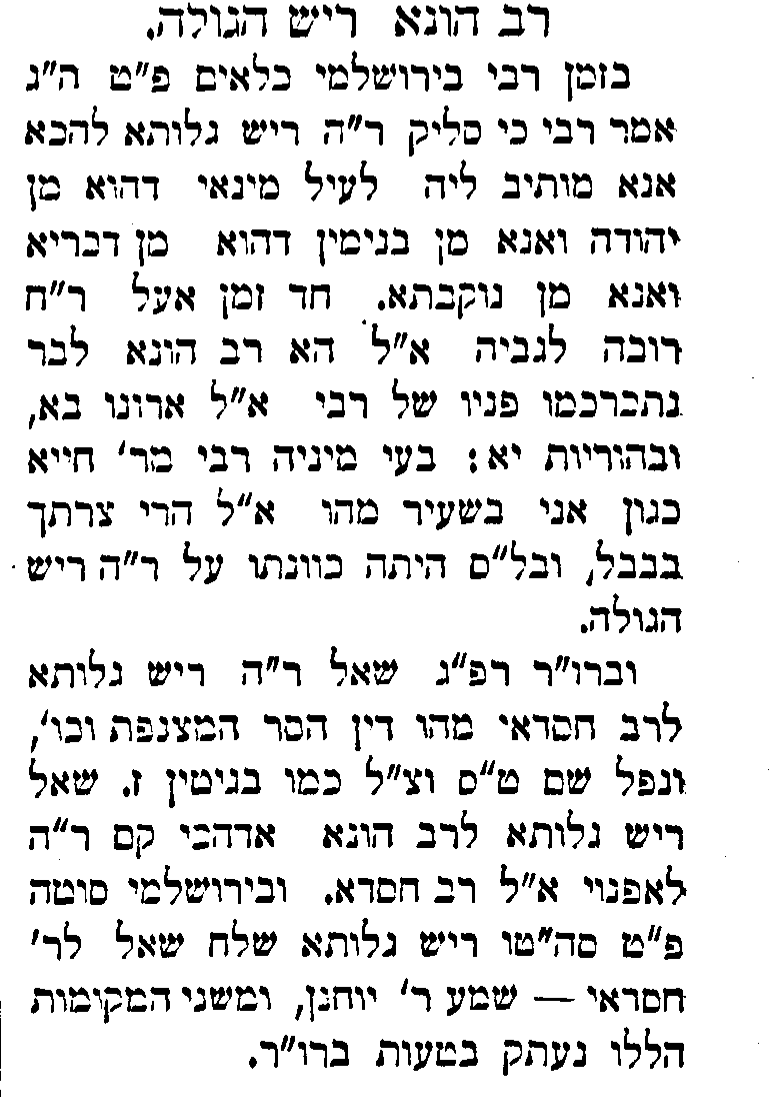
To run with the idea in this Tosafot and take it further, the other Rav Huna in our sugya is actually Huna Kamma. He was the Reish Geluta (Exilarch) in Bavel operating at the same time as Rabbi Yehuda HaNasi. Thus, he preceded Shmuel and Shmuel would inquire of him. Here is what Rav Aharon Hyman has to say about (Rav) Huna Kamma.