
Scattered Thoughts on Chullin 26

Two quick points on today’s daf, Chullin 26.
(1) The maggid shiur today (Michael) noted the existence of the rare Amora, Rav Geviha of Bei Kutal and wondered if this was an instance of the famous idea that, in each masechta, there is one Amora who does not appear anywhere else.
אֲזַל רַב גְּבִיהָה מִבֵּי כְתִיל, אַמְרַהּ לִשְׁמַעְתָּא קַמֵּיהּ דְּרַב אָשֵׁי, מַאי שְׁנָא טְמֵאִין מֵעִיקָּרָא דְּלָא, דְּאָמְרִינַן: אַיְּידֵי דְּמַיָּא יַקִּירִי שׇׁכְנִי תַּתַּאי, וּפֵירָא קָפֵי מִלְּעֵיל, וְלָא קָא סָלְקָא לְהוּ הַשָּׁקָה לְמַיָּא. אִי הָכִי, טְהוֹרִים וּלְבַסּוֹף נִטְמְאוּ נָמֵי.
Rav Geviha from Bei Katil went and stated this halakha before Rav Ashi and asked: What is different in the case of water that is impure from the outset such that bringing the temed into contact with the ritual bath would not purify it, as we say: Since the water is heavy it settles at the bottom of the vessel, and the fruit, the grape residue, floats above, and therefore, contact with the water of the ritual bath would not be effective for the water of the temed? If so, the same would apply in the case of water that was ritually pure and ultimately became impure as temed also.
In fact, I discussed this very Amora in this earlier post, about this very idea.
While rare, this Amora does appear elsewhere. But, the issue is that at least in printed editions, it sometimes appears as Rav Geviha de-vei Katil, and sometimes as Rav Geviha mi-bei Katil. That is just a textual variant, or a printing variant. Thus, he appears more than once. Further, since in Meilah it appears in one way and that is the only unique Amora in the masechta, this shows that the rule is not correct.
With the mem, this Amora appears seven times.
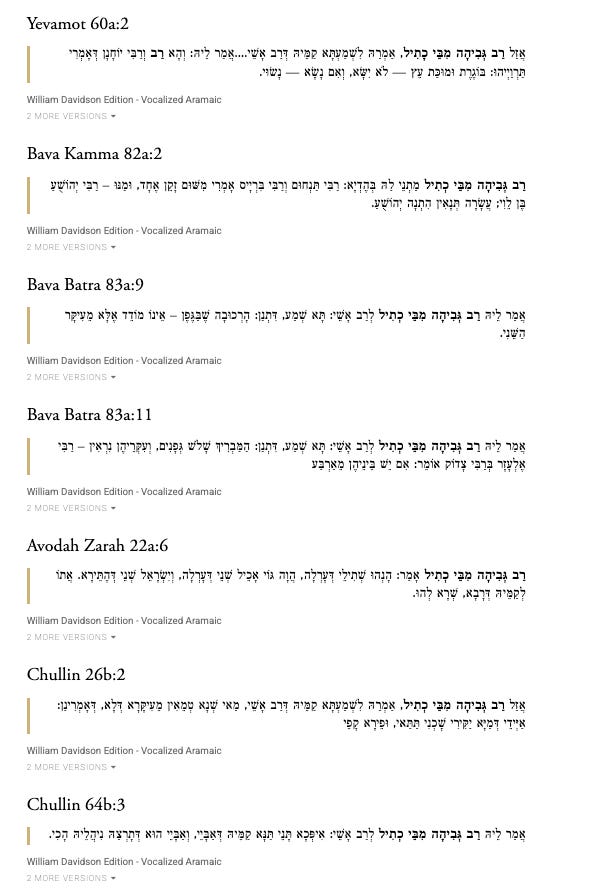
Thinking aloud about the identity of this rare Amora, off the cuff I would say that he is bringing a tradition / shmayta of a statement of Rava (fourth-generation) before Rav Ashi (sixth-generation) and posing a question about it. I don’t think this makes him fifth-generation, as a student of Rava. I think he is probably a contemporary of Rav Ashi (sixth-generation) or maybe even a (seventh-generation) student.
(2) The Mishnah records a position of Rabbi Dosa about havdalah from Shabbat to Yom Tov:
כֵּיצַד מַבְדִּילִין? ״הַמַּבְדִּיל בֵּין קוֹדֶשׁ לְקוֹדֶשׁ״. רַבִּי דּוֹסָא אוֹמֵר: ״בֵּין קוֹדֶשׁ חָמוּר לְקוֹדֶשׁ הַקַּל״.
How does one recite havdala in that case; i.e., what is the formula of the blessing? It concludes: Who distinguishes between sacred and sacred, as opposed to the standard blessing at the conclusion of Shabbat: Who distinguishes between sacred and profane. Rabbi Dosa says that the formula is: Who distinguishes between greater sanctity and lesser sanctity.
and the gemara says that we don’t rule like Rabbi Dosa.
רַבִּי דּוֹסָא אוֹמֵר: ״בֵּין קֹדֶשׁ חָמוּר לְקֹדֶשׁ הַקַּל״, וְלֵית הִלְכְתָא כְּוָותֵיהּ.
The mishna teaches: Rabbi Dosa says that the formula is: Who distinguishes between greater sanctity and lesser sanctity. The Gemara comments: And the halakha is not in accordance with his opinion.
I generally don’t know about these instances of vehilcheta, whether they are original to the gemara or represent later Geonic or even Rishonic insertions. There are a few elsewhere that are explicitly labeled Geonic by Tosafot, with the effect that they feel free to argue with them.
Interestingly, unlike our printed texts and a few other manuscripts, the Vatican 120-121 manuscript has הִלְכְתָא כְּוָותֵיהּ, without the leit, and on the side, another handwriting writes in the word וְלֵית. That implies that we do rule like him, but then someone corrected it.
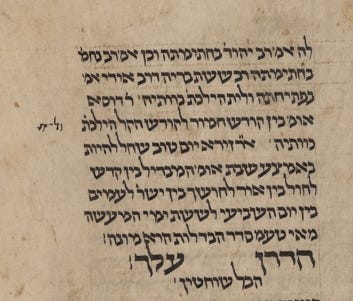
But, I think that implication is wrote. If it were so, I would expect a leading vav to make the word vehilcheta. Rather, this is simply a true omission, an error by the scribe, that was then corrected in the margin.