
Shechita Without Intent -- full article

This is my Jewish Link article for this coming Shabbos. Yes, it is still running one week behind, so this is this past Sunday’s daf.
While valid shechita must be the result of human action, it need not result from human intent, or kavana. We see this in the opening Mishnah of Chullin (2a), which states that all may shecht and have their shechita be deemed valid except for a deaf-mute, imbecile and minor (חֵרֵשׁ שׁוֹטֶה וְקָטָן); but that the concern there is (not that lack intent but) that they might mess up the shechita. Therefore, וְכוּלָּן שֶׁשָּׁחֲטוּ, if any of them shechted with others observing them, the shechita is deemed valid.
In the ensuing gemara, various named Amoraim propose classes of people included by the original statement that anyone may shecht. The Talmudic Narrator then analyzes how these named Amoraim would analyze the remaining phrases in the Mishnah and often attributes to these Amoraim the analysis that וְכוּלָּן שֶׁשָּׁחֲטוּ could not possibly refer to the חֵרֵשׁ שׁוֹטֶה וְקָטָן, and considers the idea of it referring to them as a linguistic difficulty – if it were a continuation, the Mishnah should have stated וְאִם שָׁחֲטוּ. Personally, I think the most straightforward reading of the Mishnah is that it indeed refers to the חֵרֵשׁ שׁוֹטֶה וְקָטָן, and represents an argument: since this is a concern about them messing up the shechita, if we obviate that concern by observing them, the shechita is valid. We can discuss whether this means ab initio or after the fact. I suspect that all the named Amoraim would agree with this reading. Regardless, Abaye and Rava, fourth-generation Pumbeditan Amoraim, certainly agree with this חֵרֵשׁ שׁוֹטֶה וְקָטָן reading (Chullin 3a), as does their grand-student, sixth-generation Rav Ashi, in Mata Mechasya (Chullin 3b).
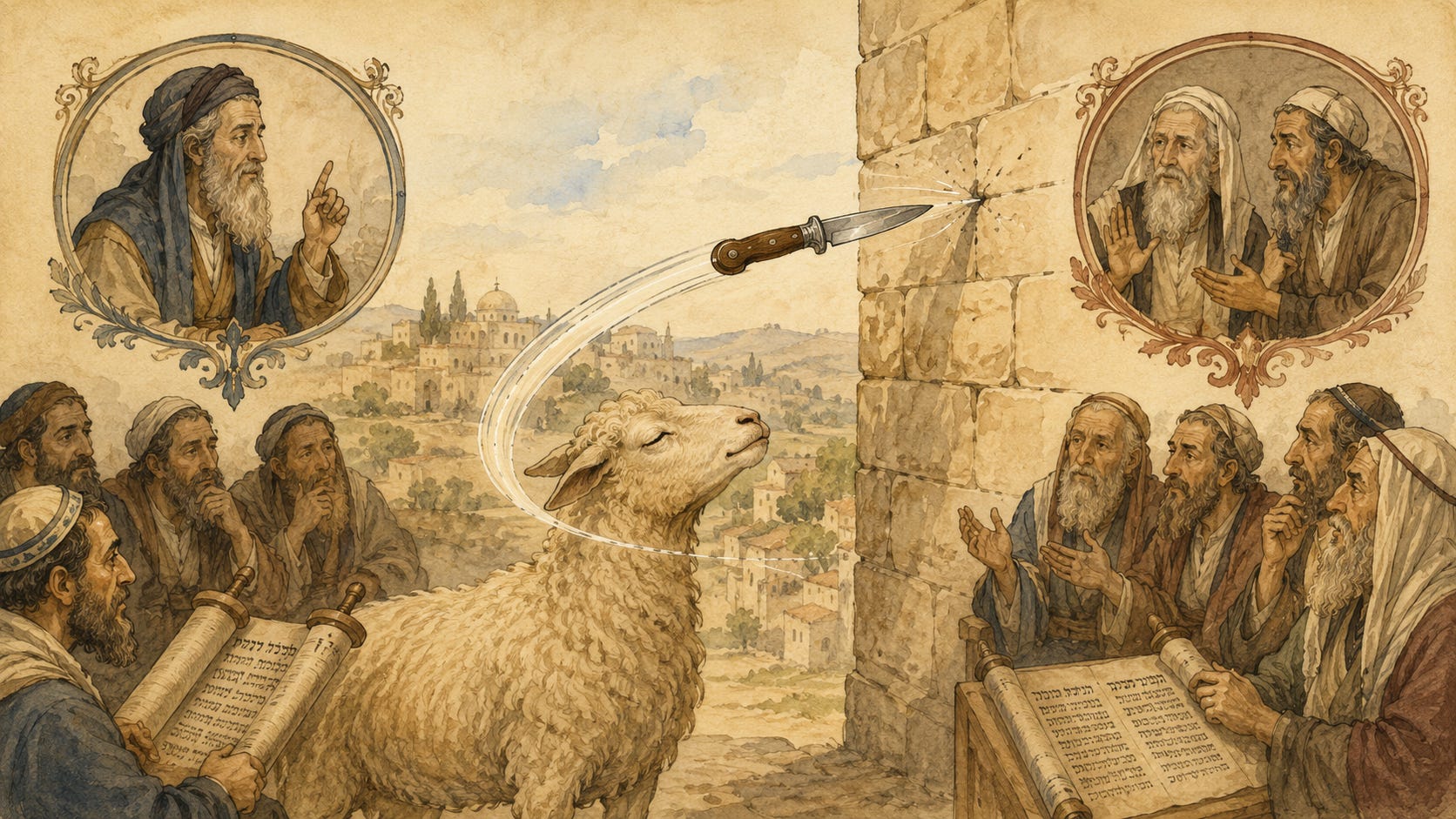
Perhaps relatedly, Rava analyzes the opening Mishnah as taking the position that shechita does not require intent (Chullin 12b). He identifies the Tanna taking this position as the fifth-generation Tanna, Rabbi Natan the Babylonian. After all, אוֹשַׁעְיָא זְעֵירָא דְּמִן חַבְרַיָּא taught a brayta: If someone threw a knife to embed it in a wall and, in the course of its flight, it shechted an animal properly, Rabbi Natan deems the shechita valid while the (contemporary) Sages deem it invalid. Not only that, Rava continues, but Oshaya both taught the brayta and stated about it that the halacha is like Rabbi Natan. Note that Oshaya must be of an Amoraic generation, because it is not the job of a Tanna to say that the halacha is like a Tanna in a brayta he is teaching. Also, given that the plain Mishnah adopts this Rabbi Natan position, we may take it as Rabbi Yehuda HaNasi’s endorsement as practical halacha.
Repeated Quotation
This sugya sub-unit also appears later, on Chullin 31a. The Mishnah stated that if a knife fell and shechted, it is invalid, since Devarim 27:7 stated וְזָבַחְתָּ … וְאָכַלְתָּ, to teach that specifically that which you shecht you may eat. The implication is that valid shechita must come about through human agency. The Talmudic Narrator elaborates for us that the Mishnah framed it as mere falling. However, if someone dropped the knife / caused it to fall, it would be valid, despite him not having an intent. To this, we wonder which Tanna takes the position that shechita does not require intent. Then, the entire sub-sugya repeats, from Rava’s identification until Oshaya’s addition that the law follows Rabbi Natan.
The Talmudic Narrator then reacts that Rava already said this once, in the context of Chullin 12b. The Narrator resolves this by showing how each context adds something. The deaf-mute et al. lack daat, a specific level of understanding, but do have intent to cut. The thrown knife results from the force of someone with daat, but without even intent to cut.
We sometimes encounter an identical statement from the same Amora in different contexts, and even instances where the same words (e.g. from Rabbi Yirmeyah) mean different things in each context. We can then wonder whether that Amora actually repeated the statement, or whether the quote is quasi-pseudepigraphic, with the Narrator quoting that Amora as directly speaking because elsewhere that Amora makes the point. I often take a contrary position. After all, the Talmudic Narrator frequently takes pains to make such applied statements explicit and transparent, with the citation formula of “as X said, for X said”.
Here as well, the Talmudic Narrator seems genuinely surprised that Rava uttered his statement upon two separate Mishnayot. It makes little sense to deliberately duplicate Rava’s statement from elsewhere and then express wonder at the duplication. This suggests that, at least here, Rava indeed uttered his statement in both contexts.
An alternative is that there are multiple strata of Talmudic Narrators. An earlier Narrator or Redactor (such as a fifth-generation student of Rava like Rav Zevid or Rav Kahana, or sixth-generation Amoraim like Ravina and Rav Ashi) applied Rava’s statement to both contexts in a proto-sugya. Later, a Savoraic Narrator could react to the proto-sugya and explore the significance of the repetition. If so, we can wonder which of the two Rava appearances is the primary, original context. On the one hand, little analysis is required to deduce from the opening Mishnah that a חֵרֵשׁ שׁוֹטֶה וְקָטָן are shechting without daat and thus intent. Conversely, while the Mishnah of the falling knife actually invalidates the shechita, and a deduction is needed to arrive at a human-dropped knife creating a valid shechita, a dropped and a thrown knife represent a much closer match.
Oshaya the Lesser
Above, I deliberately left אוֹשַׁעְיָא זְעֵירָא דְּמִן חַבְרַיָּא, who taught the brayta, untranslated and ambiguous. Rashi (on 31a) offers two parses of the name. His first explanation is that זְעֵירָא modifies דְּמִן חַבְרַיָּא, so that this Oshaya is the youngest of the academy. His preferred interpretation is Oshaya the Younger / Lesser, who is of the academy. Tosafot on Chullin 12b suggest that Chavraya is a place name. They point to Bereishit Rabba, where Avimi from Chavraya would visit the sick. (However, we could argue that that is also Avimi of the scholars.) That would make him Oshaya the Younger from the place Chavraya. Ran concurs, pointing to Bereishit Rabba. He rejects the idea that it should be parsed “the youngest of the chavura”, for then it should simply say מִן חַבְרַיָּא instead of דְּמִן חַבְרַיָּא. I don’t find this proof compelling.
Thinking it through, I would flesh out a few possibilities. Foremost, I believe that Ze’eira most likely modifies Oshaya. Recall that we speak of an Amora, who can teach a brayta and note that we rule like the Tanna in that Mishnah. The very purpose of stating Oshaya Ze’eira is then obvious. There is a famous Rabbi Oshaya, a transitional Tanna / Amora who, alongside Rabbi Chiyya, curated precise braytot. That Rabbi Oshaya is often called Rabbi Oshaya Rabba or Rabbi Oshaya Ruba. To make clear that we speak of a later, lesser, “younger” Sage named Oshaya, we would attach the Ze’eira suffix.
Further, there are recurring Sages in Talmud Bavli named Rav Oshaya and Rav Chanina, who may be Rabba bar Nachmani’s brothers. They moved to the land of Israel but, given that in Bavli they retain the Rav title instead of Rabbi, they did not obtain rabbinic ordination. See Kiddushin 33b, where one sage says to two colleagues that they should not have stood for him, דְּאַתּוּן חַכִּימֵי וַאֲנָא חָבֵר, “for you are chachamim and I am a chaver”, implying that chaver is a lower, unordained status. In Yerushalmi, these scholars are specifically referred to as the colleagues (chavraya) of the rabbis. For instance, Yerushalmi Shabbat 3:1 has בְּעוֹן קוֹמֵי רִבִּי זְעִירָא וְרִבִּי הוֹשַׁעְיָה וְרִבִּי חֲנַנְיָה חֲבֵרֵיהוֹן דְּרַבָּנִן. Since I believe this is the same Hoshaya / Oshaya, I think that דְּמִן חַבְרַיָּא means that he is from among the unordained Sages, matching חֲבֵרֵיהוֹן דְּרַבָּנִן. It surely does not refer to a place. Note also the curious occurrence of רִבִּי זְעִירָא. I wonder if that may be a scribal error for Rabbi Hoshaya Ze’ira, if not for Rabbi Zeira actually belonging to the group.
Finally, there may be a chavura, a special fellowship narrower than an academy, to which various Sages belonged. In Sanhedrin 65b, Rava created a Golem and sent it to Rav Zeira (probably Rav Zeira II, a fourth-generation Pumbeditan Amora), who tried unsuccessfully to engage it in conversation and thereupon concluded, “You are from the chavraya! Return to your dust!” This may place Rava and Rav Zeira as members of the fellowship. In four places, Rava says “I and the lion of the chavura explained it” and the gemara identifies the lion, either as Rav Zeira (Bava Batra 88a and Menachot 40b) or third-generation Rav Chiya bar Avin (Shabbat 111b and Sanhedrin 8b). This may revive the idea of Oshaya as the זְעֵירָא, youngest, of the special Rava fellowship.