Signing Above an Elder?

In yesterday’s daf, Bava Batra 167a, we see fourth-generation Rava signed on a document with someone from an earlier scholastic generation:
הָהוּא שְׁטָרָא דַּהֲוָה חֲתִים עֲלֵיהּ רָבָא וְרַב אַחָא בַּר אַדָּא. אֲתָא לְקַמֵּיהּ דְּרָבָא, אֲמַר לֵיהּ: דֵּין חֲתִימוּת יְדָא דִּידִי הִיא, מִיהוּ קַמֵּיהּ דְּרַב אַחָא בַּר אַדָּא לָא חֲתִימִי לִי מֵעוֹלָם! כַּפְתֵיהּ וְאוֹדִי. אֲמַר לֵיהּ: בִּשְׁלָמָא דִּידִי – זַיֵּיפְתְּ, אֶלָּא דְּרַב אַחָא בַּר אַדָּא, דְּרָתֵית יְדֵיהּ – הֵיכִי עֲבַדְתְּ? אָמַר: אַנַּחִי יְדַאי אַמִּצְרָא. וְאָמְרִי לַהּ: קָם אַזַּרְנוּקָא וּכְתַב.
The Gemara relates: There was a certain document upon which the signatures of Rava and Rav Aḥa bar Adda were signed. The one holding the document came before Rava, who said to him: This is my signature, but I never signed any document before Rav Aḥa bar Adda. Rava bound the holder of the document, i.e., he subjected him to physical coercion, and he admitted the forgery. Rava said to him: Granted, you were able to forge my signature, but how did you perform a forgery of Rav Aḥa bar Adda’s signature, since his hands shake and as a result his signature is distinctive? The man said: I placed my hands on the rope of a narrow footbridge [amitzra], and was thereby able to duplicate Rav Aḥa’s signature. And some say that the forgery was accomplished when the forger stood upon a wobbly water skin [azarnuka] and wrote the signature.
You can read about Rav Acha bar Adda here. He was a student of first-generation Amora Rav, but most of his Torah he received from Rav Hamnuna. But of course, there were several Rav Hamnunas - see the disambiguation page. You can read Rav Aharon Hyman’s writeup here. So he must have been long-lived, such that he would have such shaky handwriting in Rava’s days.

The maggid shiur of today’s daf followed Artscroll’s guidance, and took קַמֵּיהּ … לָא חֲתִימִי לִי מֵעוֹלָם as saying that he never signed his name above that of Rav Acha on a document. Artscroll writes “I never signed before Rav Acha bar Adda.” In footnote 21, they write:
Rava’s signature appeared first and Rav Adda’s second. Rava said: Rav Acha is much older than I. I would never have signed before him. (Yad Rama). This must be a forgery.
The Yad Ramah commentary is on Sefaria, and indeed, that is what it states.
סט. ההוא שטרא דהוו חתימי עליה רבא ורב אחא בר אדא אתא לקמיה דרבא א"ל אין חתמות ידאי דידי הוא מיהו קמיה דרב אחא בר אדא לא חתים לי מעולם. כלומר מעולם לא הקדמתי חתימתי לחתימתו, לפי שזקן היה ביותר. כפתיה ואודי א"ל בשלמא דידי זייפת אלא דרב אחא בר אדא דריתא ידיה היכי עבדת אמר ליה (אנאי) [אנחי] ידאי אמצרא דרחייא אי נמי אזרנקא וכתבי.
I don’t buy it, because this transforms Rava’s statement into an argument that he never would have signed before him. And then, the people in the daf chabura discussed how this forger could be so silly and unaware, that he went to such lengths of standing on a water skin to imitate the writing style, but didn’t know that the older witness’s signature appears first in a document. This is selective ignorance in the forgery of documents.
A plausible alternative reading is that קַמֵּיהּ … לָא חֲתִימִי לִי מֵעוֹלָם means “I never ever signed in his presence.” For instance, several times on the same daf lekameih is used in this sense, including the introduction to this very story. Thus, הָהוּא שְׁטָרָא דַּהֲוָה חֲתִים עֲלֵיהּ רָבָא וְרַב אַחָא בַּר אַדָּא. אֲתָא לְקַמֵּיהּ דְּרָבָא, means that the shtar came before, that is, in front of Rava to weigh in on.
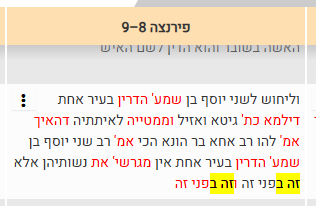
Similarly, regarding two Yosef ben Shimons on amud bet, we read that the get must be administered זֶה בִּפְנֵי זֶה. The word bifnei means in front of the other, and it is reciprocal, not that X must precede Y (and also Y must precede X). Yes, that is Hebrew while lekameih is Aramaic, but these are equivalent words that work in similar fashion, with a similar set of word senses.
Meanwhile, people have discussed using this Talmudic account to determine precedence between witnesses where one is older and the other is a kohen. After all, Rava was obviously younger that Rav Acha bar Adda, and Rava was also a kohen.
However, this does not really work out, because this is a misread of another gemara that Rava was a kohen of the house of Eli. It was Rabba and Abaye, not Rava and Abaye under discussion there.
Also, as discussed, I don’t think this kamei means above within the shtar.
Since I’ve mentioned two Yosef ben Shimons, I’ll also point to my article covering that situation, of two Yosef ben Shimons from the same town, and the probability of that event occuring.
Two Yosef ben Shimons (article summary)

A while back, when we were studying Gittin 21, I wrote about a topic from today’s daf, the possibility of having two people named Yosef ben Shimon in the same town. I will link to it / summarize it below.
Additionally, I’ll note that on this daf, when discussing the solution to two Yosef ben Shimons married to wives who also share their name,
וְלֵיחוּשׁ לִשְׁנֵי יוֹסֵף בֶּן שִׁמְעוֹן הַדָּרִים בְּעִיר אַחַת – דִּלְמָא כָּתֵיב גִּיטָּא, וְאָזֵיל וּמַמְטֵי לֵיהּ לְאִיתְּתֵיהּ דְּהַיְאךְ! אֲמַר לְהוּ רַב אַחָא בַּר הוּנָא, הָכִי אָמַר רַב: שְׁנֵי יוֹסֵף בֶּן שִׁמְעוֹן הַדָּרִים בְּעִיר אַחַת – אֵין מְגָרְשִׁין נְשׁוֹתֵיהֶן אֶלָּא זֶה בִּפְנֵי זֶה.
They continued their line of questioning: And even if both names are known to the scribe, let there be a concern for the possibility of two men with the same name, such as two men named Yosef ben Shimon, who live in one city and whose wives share the same name as well, and perhaps the man who made the request will write the bill of divorce and intend to go and give it to the wife of the other man who bears the same name as him. Rav Aḥa bar Huna said to them in reply that this is what Rav says: If there are two men named Yosef ben Shimon who live in one city and are married to women who share the same name, they may divorce their wives only in the presence of one another.
what does it mean “in the presence of one another”? Artscroll ran in the footnote with one explanation, that both Yosef ben Shimons need to be present at the time of the get delivery. And, presumably, if there were 10000 people named Menachem Mendel who were married to Chaya Mushka, you’d need to gather all of them together. There are other alternative readings (which Artscroll mentions as a cf. in a footnote, such as Meiri). Essentially, “the presence of one another” in context can mean that husband and wife must both be present. (Should one of those be זו instead of זה?)
Scribal variants can works with either, but there was one, Florence 8-9, that makes it more reciprocal — “this before this one and this before this one”.