

While reading yesterday’s daf, Horayot 5a, it occurred to me that we may be misreading some of the derashot. The word chet commonly means sin, but it also and relatedly means error. Most literally, it means to miss your mark, for instance in archery. Thus, for instance, in Mishlei 19:2:
גַּ֤ם בְּלֹא־דַ֣עַת נֶ֣פֶשׁ לֹא־ט֑וֹב וְאָ֖ץ בְּרַגְלַ֣יִם חוֹטֵֽא׃
A person without knowledge is surely not good;
He who moves hurriedly blunders.
If you rush you can miss / blunder. From that most literal, we have all sorts of figurative errors, up to spiritual errors.
This brings us to this brayta, as rendered in English under Rav Steinsaltz’s direction:
גְּמָ׳ תָּנוּ רַבָּנַן: יָדְעוּ שֶׁהוֹרוּ, וְטָעוּ מָה הוֹרוּ, יָכוֹל יְהוּ חַיָּיבִין? תַּלְמוּד לוֹמַר: ״וְנוֹדְעָה הַחַטָּאת״, וְלֹא שֶׁיִּוָּדְעוּ הַחוֹטְאִין.
GEMARA: The Gemara elaborates on the dispute cited in the mishna. The Sages taught in a baraita: In a case where the judges knew that they issued an erroneous ruling, and erred in remembering which erroneous ruling they issued, one might have thought that they would be liable to bring an offering for this. The verse states: “And the sin that they sinned became known, the congregation shall sacrifice” (Leviticus 4:14), indicating that liability is only in a case where the sin became known to the court that issued the erroneous ruling, and not in a case where it became known only to the sinners. In this case, the sinners are certain that they sinned, but the court does not know the sin with regard to which it issued the ruling.
and Artscroll renders similarly, that we are dealing with the chatat = sin, vs. the chotei = sinner.
However, consider that the brayta is about the court realizing that they had erred in judgement, יָדְעוּ שֶׁהוֹרוּ, but not what their error in judgement was, and I think a better fit is that וְנוֹדְעָה הַחַטָּאת is interpreted to mean that it became known to the course the mistake (they made), and not that the chote’im became known, that the ones making the mistake in judging became known. If it referred to the sinners, that would be the tzibbur, not the court, and the focus is not שֶׁהוֹרוּ.
Below in the gemara, Rav Yehuda cites Rav saying, or else Rava says, this brayta could not have been authored by Rabbi Eliezer, who says that an inadvertant sinner not knowing the specifics of the sin (whether he ate cheilev or notar) is nonetheless liable.
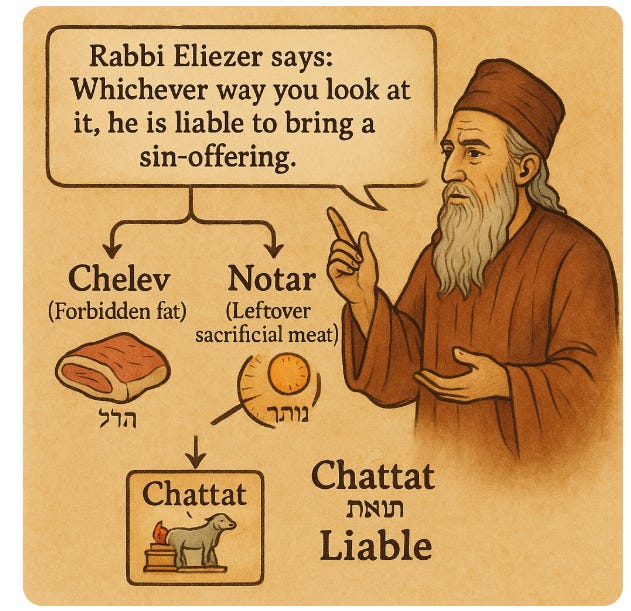
Rav Ashi disagrees with Rava, suggesting how it can be Rabbi Eliezer — the typical sin case is different because of a specific wording of a verse, אֲשֶׁר חָטְאוּ עָלֶיהָ. Then, the Talmudic Narrator questions Rav Ashi, since by a typical erroneous sin it states אֲשֶׁר חָטָא בָּהּ; but then answers that that verse is needed for a different purpose. This is the typical Talmudic Narrator approach of one-to-one correspondence between derashot and halachot, which often leads to a derasha chain.
But I think that Rav Ashi is saying that this is not your typical erring sin. Rather, it is the erring that caused the others to err upon it, meaning the erroneous hora’ah must be known, not just that the judges erred, in order for them to bring this special par he’elem davar shel tzibbur. Meanwhile, Rabbi Eliezer is focused on the actual actions that an individual sinner did.