
The Source for Sparing

In today’s daf, Menachot 86b, we see the idea of chisachon, sparing. The gemara states:
יָכוֹל יְהֵא זָךְ כָּתִית פָּסוּל לִמְנָחוֹת? תַּלְמוּד לוֹמַר ״וְעִשָּׂרוֹן סֹלֶת בָּלוּל בְּשֶׁמֶן כָּתִית״, אִם כֵּן מָה תַּלְמוּד לוֹמַר ״לַמָּאוֹר״? אֶלָּא מִפְּנֵי הַחִיסָּכוֹן.
One might have thought that refined, pounded oil is unfit for meal offerings, since the verse specifies that this oil is to be used for illumination. To dispel this notion, the verse states with regard to the meal offering brought with the daily offering: “And a tenth of fine flour, thoroughly mixed with a quarter of a hin of pounded oil” (Exodus 29:40). This indicates that pounded oil is fit to be used in meal offerings. If so, what is the meaning when the verse states that the refined pounded oil is “for illumination”? Rather, the Torah requires the use of refined pounded oil only for the Candelabrum, due to the sparing [haḥisakhon] of money, as the highest-quality oil is very expensive.
מַאי ״חִיסָּכוֹן״? אָמַר רַבִּי אֶלְעָזָר: הַתּוֹרָה חָסָה עַל מָמוֹנָן שֶׁל יִשְׂרָאֵל.
The Gemara asks: What is the reason for being sparing? Rabbi Elazar says: The intention is that the Torah spared the money of the Jewish people and did not require that the highest-quality oil be used for the meal offerings.
In Rashi manuscript (as opposed to the Rashi printed higher in the page, which some have said shows the marks of the Rash miShanz, so that we could perhaps call it the Rashi miShanz), we have the following explanation:
התורה חסה כו’ - ומשכחת לה בנגעי בתים בת”כ דכתיב ופנו את הבית בטרם יבא הכהן וגו’ על מה התורה חסה אם על כלי עץ וכלי שטף יש להם טהרה במקוה אלא על כלי חרס שאין להם טהרה במקוה חסה תורה ואמרה לפנותם שלא יטמאו ושוב אין תקנה:
That is, Rashi points to the emptying of the leprous house before declaring it leprous, to spare all the property from being ruined be becoming ritually impure.
ArtScroll, in footnote 12, in the square brackets, finds this Rashi mildly problematic. Thus:
[This explanation of Rashi ms. is difficult, as the Gemara above (76b) cited a different Biblical source for the principle that the Torah is concerned for Israel’s wealth. See Turei Even, Aruch LaNer, Yom Teruah and Sifsei Chachamim to Rosh Hashanah 27a for various explanations as to why both sources are needed.]
Now, this is the 9th perek which, according to the front page, was “elucidated” by Rabbi Eliezer Herzka. On the other hand, the square brackets, sources tell me, is by the editors. That might mean the General Editor, who would be R’ Hersh Goldwurm z”tzl. Or, perhaps it refers to the “General Editorship of Rabbi Yisroel Simcha Schorr and Rabbi Chaim Malinowitz (in collaboration with a team of Torah Scholars).”
Regardless, I remember what they noted on Menachot 76b. The gemara there read:
אָמַר רַבִּי אֶלְעָזָר: מַאי ״מִפְּנֵי הַחִיסָּחוֹן״? אָמַר רַבִּי אֶלְעָזָר: הַתּוֹרָה חָסָה עַל מָמוֹנָן שֶׁל יִשְׂרָאֵל. הֵיכָא רְמִיזָא? דִּכְתִיב: ״וְהִשְׁקִיתָ אֶת הָעֵדָה וְאֶת בְּעִירָם״.
Rabbi Elazar says: What is the meaning of: Because of the sparing? Rabbi Elazar says: The Torah spared the money of the Jewish people. Due to the large quantity of grain needed for the shewbread every week, purchasing sifted fine flour would be a substantial expense. The Gemara explains: Where is the allusion to this principle? It is found in a verse, as it is written that when the Jewish people were thirsty in the wilderness in the aftermath of Miriam’s death, God instructed Moses: “And speak to the rock before their eyes, so that it will give forth its water; and you shall bring forth to them water out of the rock; so you shall give drink for the congregation and for their cattle” (Numbers 20:8). Evidently, the miracle of extracting water from the rock was performed even for the purpose of providing water for the livestock.
And footnote 28 ends with a paragraph noting how, in other places, such as below 86b, Rosh Hashanah, etcetera, “Rashi derives the principle from a different verse (see 86b note 12).” And refers us to a group of meforshim who grapple with it. But then adds the following final sentence:
It should be noted that the words הֵיכָא רְמִיזָא… וְאֶת בְּעִירָם do not appear in manuscript versions of the Gemara (see Dikdukei Soferim 200) and are deleted from our text by the Shita Mekubetzes (R’ Ilan ed.)
“R’ Ilan ed.” refers to the critical edition of the Shita Mekubetzet.
Regardless, this handily resolves the question. Rashi did not give a “problematic” explanation of today’s gemara on 86b, because his manuscript of gemara, and probably of all gemaras, did not have this alternative Biblical derivation for him to contend with!
While there is a cross reference from the note on 76 to the note on 86, there is no cross reference in the other direction, to the footnote on 76. The note on 76 is the regular elucidator, while the relevant not on 86 is the square brackets illustrator. Perhaps the elucidation on 76 was written later.
The relevant text on daf 76 is at the tail end of perek 7, and that perek was elucidated by Rabbi Yosef Davis. So, we have different authors who take different approaches, or are aware of different approaches.
Let us close by looking at the printing and manuscript evidence.
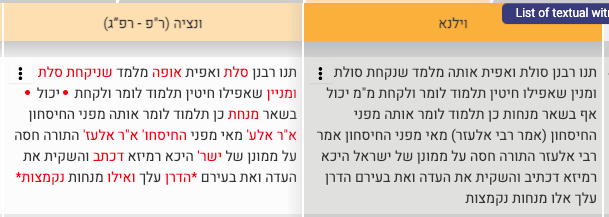
First, we have Venice and Vilna printings. They misspell the word chisachon so that it has two chets. Also, they have the passage:
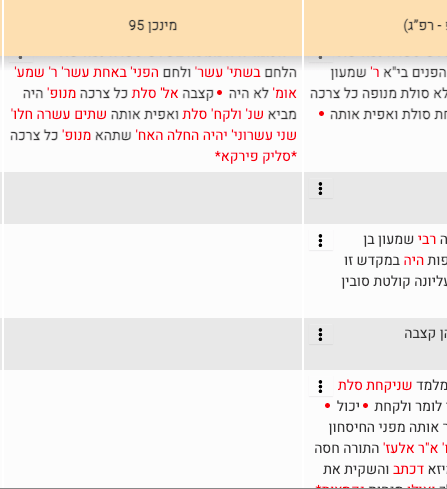
Munich 95 not only omits the Biblical verse, but the entire section about sparing:
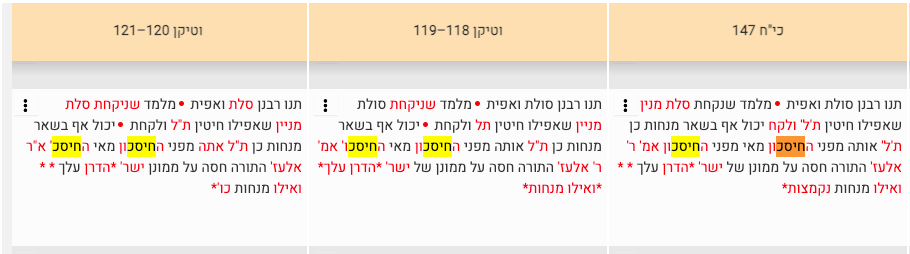
The others have the sparing explanation but not the Biblical derivation:
To my mind, it makes sense that the later gemara, Menachot 86, could primary. But then it was pulled from 86 to 76. (However, there is indeed the brayta that mentions chisachon…) Regardless, the Biblical verse might well have been added by some commentary, and then mistaken for the actual gemara and pulled in by the printers to the central column.