
Wormy Grain?

From today’s daf, Menachot 85a, the Mishnah:
וְאִם הִתְלִיעָה – פְּסוּלָה.
And if the flour became wormy, it is unfit for use in a meal offering.
and then at length in the gemara on 85b:
וְאִם הִתְלִיעָה – פְּסוּלָה. תָּנוּ רַבָּנַן: סוֹלֶת שֶׁהִתְלִיעָה רוּבָּהּ – פְּסוּלָה, וְחִיטִּין שֶׁהִתְלִיעוּ רוּבָּן – פְּסוּלוֹת. בָּעֵי רַבִּי יִרְמְיָה: בְּרוֹב חִטָּה, אוֹ בְּרוֹב סְאָה? תֵּיקוּ.
§ The mishna teaches: And if the flour became wormy, it is unfit for use in a meal offering. The Sages taught in a baraita: Fine flour the majority of which became wormy is unfit. And similarly, wheat kernels the majority of which became wormy are unfit, and they may not be used to produce fine flour for meal offerings. Rabbi Yirmeya asks: What is the meaning of this latter ruling? Is it saying only that if the majority of an individual wheat kernel becomes wormy the flour produced from it is unfit, or is it saying that when the majority of a se’a of kernels becomes wormy the entire se’a is unfit? The Gemara concludes: The dilemma shall stand unresolved.
בָּעֵי רָבָא: הִקְדִּישָׁן, מַהוּ שֶׁיִּלְקֶה עֲלֵיהֶן מִשּׁוּם בַּעַל מוּם? כֵּיוָן דְּפָסֵיל – כְּבַעַל מוּם דָּמֵי, אוֹ דִלְמָא אֵין בַּעַל מוּם אֶלָּא בִּבְהֵמָה? תֵּיקוּ.
Rava asks: If one consecrated grains of wormy wheat for use in a meal offering, what is the halakha with regard to whether he should be flogged for consecrating them due to the prohibition against consecrating a flawed item as an offering? One is flogged for consecrating a blemished animal as an offering (see Temura 6b); does the same apply to consecrating wormy wheat? Does one say that since the wheat is unfit, it is comparable to a blemished animal? Or perhaps, the prohibition against consecrating a flawed item applies only to an animal. The Gemara concludes: The dilemma shall stand unresolved.
תְּנַן הָתָם: כׇּל עֵץ שֶׁנִּמְצָא בּוֹ תּוֹלַעַת – פָּסוּל לְגַבֵּי מִזְבֵּחַ. אָמַר שְׁמוּאֵל: לֹא שָׁנוּ אֶלָּא לַח, אֲבָל יָבֵשׁ – גּוֹרְרוֹ וְכָשֵׁר.
§ We learned in a mishna elsewhere (Middot 2:5) with regard to the wood logs that are burned on the altar: Priests inspect them before they are used and any log in which a worm is found is unfit for use on the altar. In reference to this mishna, Shmuel says: They taught this halakha only with regard to a wet log, as a wormy section cannot be removed. But if a wormy section is found in a dry log, the priest scrapes the wormy spot away, and the log is fit for use.
בָּעֵי רָבָא: הִקְדִּישׁוֹ, מַהוּ שֶׁיִּלְקֶה עָלָיו מִשּׁוּם בַּעַל מוּם? כֵּיוָן דְּפָסוּל כְּבַעַל מוּם דָּמֵי, אוֹ דִלְמָא אֵין בַּעַל מוּם אֶלָּא בִּבְהֵמָה? תֵּיקוּ.
Rava asks: If one consecrated a wormy log to be used on the altar, what is the halakha with regard to whether he should be flogged for consecrating it due to the prohibition against consecrating a flawed item as an offering? Does one say that since the log is unfit, it is comparable to a blemished animal? Or perhaps, the prohibition against consecrating a flawed item applies only to an animal. The Gemara concludes: The dilemma shall stand unresolved.
This seems strange. I suppose because it is being offered on the altar, and not being consumed by humans, the worm component is not a problem? Even this is strange. ArtScroll also renders the word to be “wormy”. ArtScroll generally does not discuss the kashrut issue, except at the tail end of footnote 15, where they write:
It should be noted that the Gemara performce speaks of where the wormy kernels are removed from the sack. Otherwose, the seah would be forbidden even for private consumption, by dint of the Biblical prohibition against eating insects (Hagahos Yavetz). Nevertheless, even after the infested kernels are removed, the remaining unaffected ones are considered “blemished” with respect to being used as a Temple offering, for they were once part of an infested batch.
This seems a bit farfetched to me.
With all due respect — and I do mean respect here — I think that they may well be wrong here. First, the word hitlia may not mean infested with worms here, even though a tolaat is indeed a worm.
Let us look at our trusty Jastrow here:
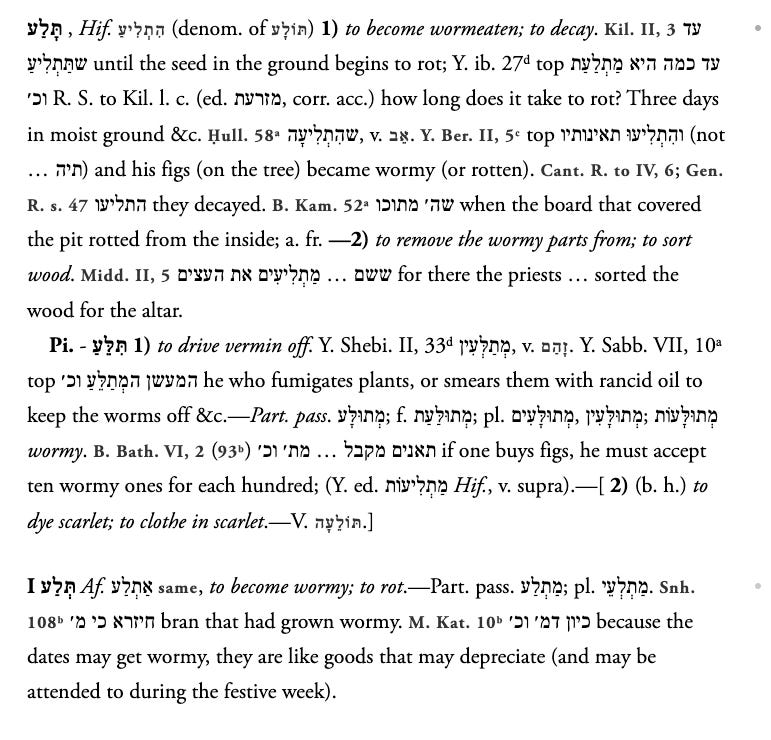
So yes, hitlia does mean to become wormy, but it also means to rot. This is because of ancient scientific beliefs. For instance, Aristotle believed in spontaneous generation, in which matter such as grain first decayed and then spontaneously generated worms and maggots. Thus, the entire process was referred to as hitlia, even before the actual worms developed. Rotting grain is not non-kosher. Further, it may even be that according to certain sugyot, such spontaneously generated creatures, such as in wormy grain, if they have not yet crawled / been shoretz on the ground, would still be kosher. But we need not even get that far, because the word means ROT.
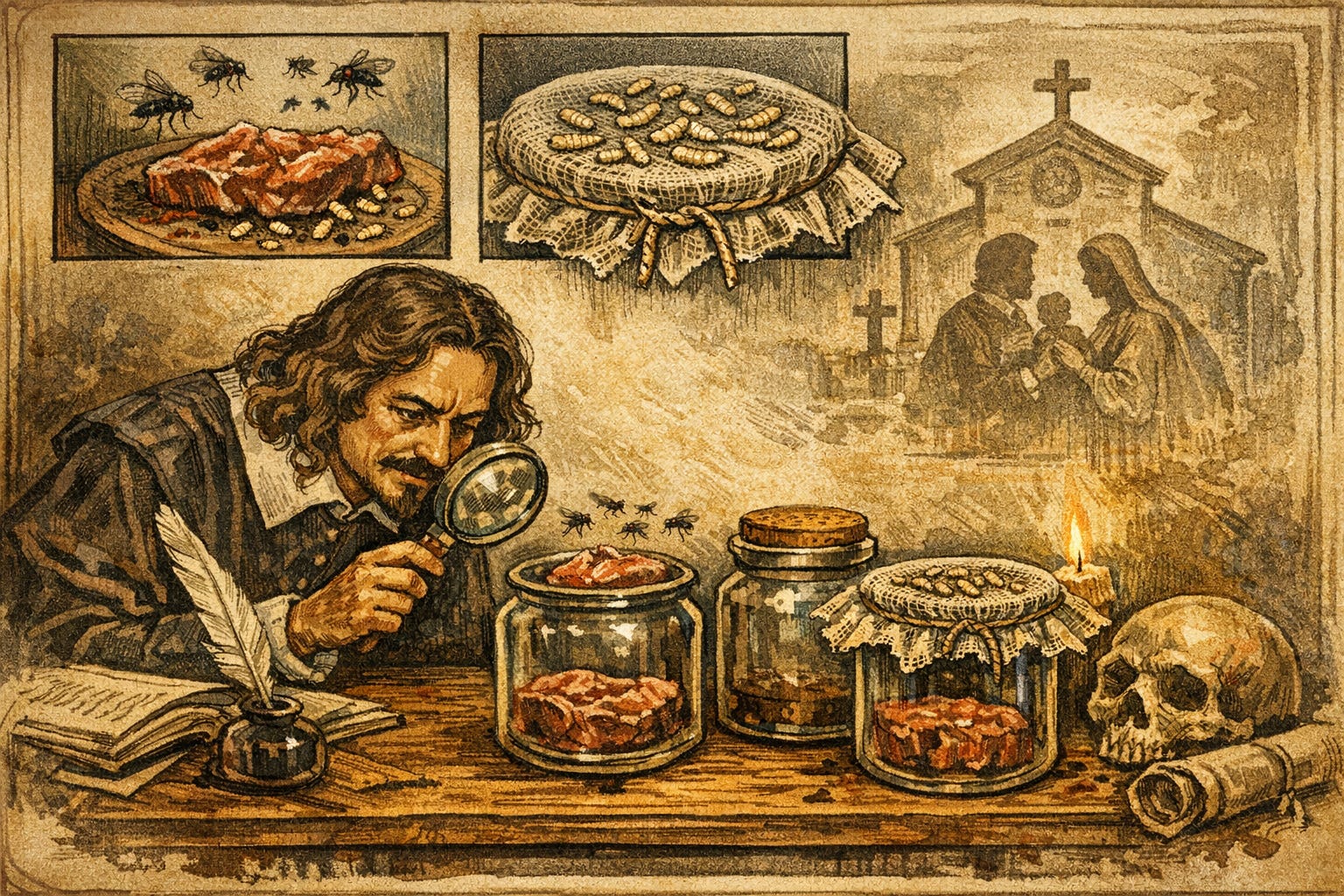
This type of spontaneous generation of rotting food was famously disproven in the cheese cloth experiment in 1668. To quote the blog I linked earlier:
In 1668, Francesco Redi challenged the idea that maggots arose spontaneously from rotting meat,” according to Wikipedia, “In the first major experiment to challenge spontaneous generation, he placed meat in a variety of sealed, open, and partially covered containers. Realising that the sealed containers were deprived of air, he used “fine Naples veil”, and observed no worm on the meat, but they appeared on the cloth. Redi used his experiments to support the preexistence theory put forth by the Church at that time, which maintained that living things originated from parents.”
Meanwhile, the Yaavetz, that is, Rav Yaakov Emden, lived from 1697 to 1776, after spontaneous generation had been disproven. He might well not have thought to translate hitlia in this fashion, of mere rotting, once the connection had been severed.
I have not researched Rav Emden’s position in general about spontaneous generation, in this and in other sugyot, but it could be that he was influenced by the results of Redi’s experiment.
To be clear you are saying that the alter log mishna is dealing with worms and the consecration case is dealing with rot?
I can't believe I never realized this.